Hammer Dulcimer in the Civil War
I grew up in Chambersburg and Waynesboro, PA near enough to Washington, Baltimore and Philadelphia to gain an early appreciation for American History. Gettysburg and the Antietam Battlefield just down the road to the east and south, brought the Civil War close to my consciousness. The area saw a lot of troop movement back and forth and Chambersburg was burned by Confederate soldiers more than once. I was drawn to old time Appalachian music because of this historical connection, and I am always happy to learn more about the folk music played in the 18th and even back to the 17th century. Documentation abounds in Civil War literature for the popularity of musicians in the army camps. Fiddle players particularly seemed to be in abundance during the time of the war. For example, Confederate Veteran magazine reported that in a regiment of Barksdale's Mississippians, there was one company of ninety men, seventy-five of whom were good fiddlers. Then there was the immortal Sam Sweeney. Sweeney was a brilliant banjo player who was employed by Confederate Calvary General Jeb Stuart to provide musical entertainment for the General and his staff while off on one of their famous raids or while in repose back in camp. Other musicians were also employed by Stuart to follow him around the countryside, and to provide music for the square dances that the General frequently arranged.

Of the four main instruments primarily used during the Civil War era, (fiddle, banjo, guitar, and hammer dulcimer), probably the hammer dulcimer is the least familiar to modern ears. The dulcimer was quite common in mid-19th century America. The dulcimer is a trapezoidal box with dozens of strings stretched lengthwise over one or two bridges near the center of the instrument and played by striking the strings with small wooden sticks that are usually referred to as "hammers."
Just prior to the Civil War, the hammer dulcimer experienced widespread popularity. Music books written especially for the instrument were published in the 1840's through the 1860's containing popular fiddle tunes of the day (such as the tunes that appear on this recording). By the 1850's, the dulcimer was being widely manufactured in shops throughout New England, the upper Midwest, and particularly in New York State. Several of these firms employed teams of salesmen who traveled throughout the Midwest and South demonstrating the instruments and making rather brisk sales. For a variety of reasons, many of the dulcimer factories in the North had to close down with the outbreak of war in 1861, at which time, according to one historian, "the boys demonstrating the dulcimers in the South were obliged to leave hastily."
During the Civil War there were literally thousands of hammer dulcimers being sold and played throughout the country, especially in the Ohio Valley and the South. They were used primarily as lead instruments for dances and as parlor instruments to provide background music for social gatherings. The hammer dulcimer's popularity continued after the war to the end of the 19th century when, for various reasons, it experienced a long decline that lasted until a revival of interest in the instrument occurred in the 1970's when hammer dulcimer players like Guy Carawan,John McCutcheon, the band Trapezoid and Malcolm Dalglish appeared on the scene. For further reading on the history of the hammer dulcimer, see one of my favorite sources, The Hammered Dulcimer in America, by Nancy Groce, published by the Smithsonian Institution Press. Thanks to the late dulcimer player Jim Taylor for first compiling this information for dissemination.
Some Civil War era tunes that are favorites of mine include Soldier’s Joy, Liberty, Temperance Reel, Flowers of Edinburgh, Swallow Tail Jig, January the Eight (Battle of New Orleans), Bonaparte Crossing the Rhine, Waiting for the Federals (Seneca Square Dance), Haste to the Wedding, Arkansas Traveler, Hell Among the Yearlings, Hawks & Eagles, Scotland the Brave, Smash the Windows, Rickett’s Hornpipe, Marching Through Georgia, and Booth Shot Lincoln.
I love to play Ashokan Farewell, often associated with the Civil War era, thanks to fiddler Jay Ungar and his work with Ken Burns.
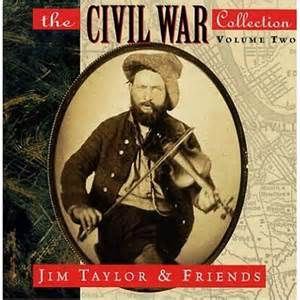
Jim Taylor released two CD volumes in his The Civil War Collection (first recording 1995). He included fine renditions of Falls of Richmond, Money Musk, Quince Dillon’s High D, and John Brown’s Dream.
Sage Snider, a public programs intern at the Smithsonian Institution produced a live program called Fiddling the Civil War in 2013.

Playing Civil War fiddle tunes for visitors
In her program, Ms. Snider played many of these tunes plus the songs Hard Times, Lorena, Home Sweet Home, Kingdom Coming, and Maryland, My Maryland.
I have enjoyed playing at various historic sites, festivals and events, primarily throughout Pennsylvania, and look forward to playing for many more.
# # #




Comments